The national student-to-counselor ratio sits at 372:1 — well above the 250:1 the American School Counselor Association recommends. If your caseload landed on your desk this August feeling heavier than it should, that’s not a you problem. It’s a math problem, and it means the first two weeks of the school year matter more for a counselor than for almost anyone else on campus. Whatever systems you don’t set up now, you’ll be improvising in October when application season hits at full speed.
This isn’t a “22 things to do before summer ends” list of vague reminders. It’s the specific setup work that determines whether your fall runs on a system or on memory.

Week 1: Know exactly who's on your caseload
You can’t advise a list you haven’t audited. Before anything else:
- Pull the full roster — every senior (and junior, if your school starts early) assigned to you, confirmed against the registrar’s current enrollment, not last spring’s list. Students transfer, withdraw, and get reassigned over the summer.
- Flag anyone with an incomplete record — missing transcripts from a transfer student, an IEP/504 that affects testing accommodations, a student who hasn’t taken the SAT/ACT yet and is planning to apply early.
- Identify your early-decision and early-action students first. They have the least runway. If your school has 20 students applying EA/ED, they need a list, essay plan, and recommendation requests locked down well before your general senior meetings even start.
- Note who’s new to your caseload versus who you advised last year — new relationships need more get-to-know-you time before a list conversation is productive.
If your roster still lives across three spreadsheets from three different counselors, this is the week to consolidate it into one place before the data gets stale again. A bulk CSV/Excel import that pulls everyone into a single, current roster in one pass beats rebuilding a spreadsheet by hand every August, Counsely’s import handles this in minutes instead of the usual half-day of copy-pasting.

Week 1–2: Rebuild your deadline calendar for this specific class
Every graduating class has a slightly different deadline map depending on which colleges they’re targeting. Don’t reuse last year’s calendar wholesale.
- Confirm early deadlines (EA/ED/priority) for the specific schools your students are actually considering — these shift year to year and vary by 2–4 weeks between colleges.
- Block your own internal deadlines ahead of the college deadlines: when transcript requests need to be in, when recommendation letters need to be finished, when you’ll do a final list review with each senior.
- Share a version of this calendar with students and parents. Half of the “wait, it’s due when?” emails in October are preventable with one shared calendar in August.

Week 2: Get college lists started before the fall rush
You don’t need finished lists in week two — you need started lists, so August isn’t the only month anyone thinks about this before the November crunch.
- Identify students with no list at all yet and get them scheduled first; they need the most runway.
- For students with a rough list already, sanity-check it against current GPA and test scores rather than assuming last spring’s draft still holds. A student’s target school in April can quietly become a reach or a safety by August depending on how junior year finished and whether new scores came in over the summer.
- Flag students whose list is entirely reach schools or entirely name-brand schools with no financial safety — better to have that conversation in August than in January. (For the full framework, see How to Build a Balanced College List.)
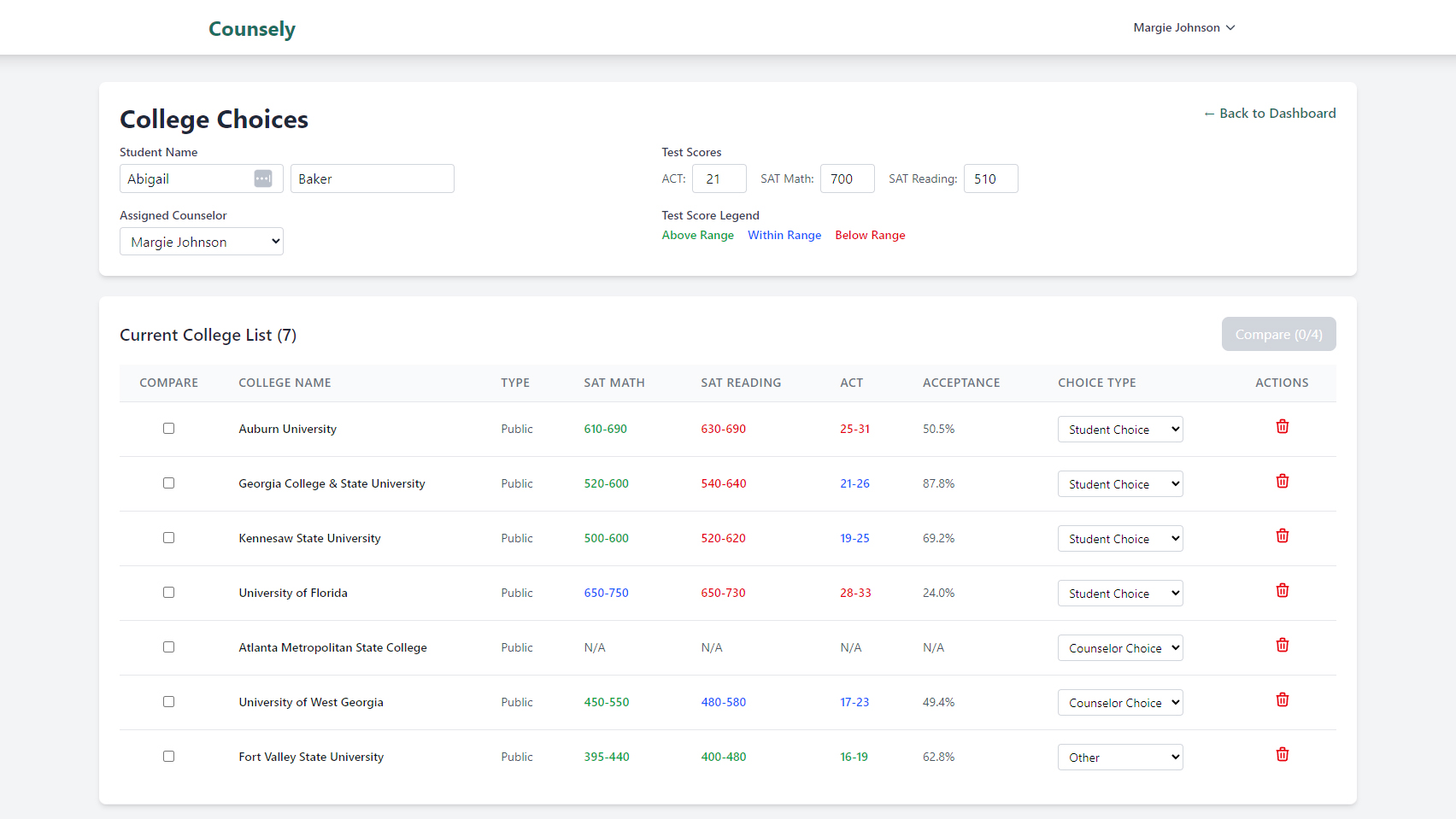
This is usually the single most time-consuming task on this checklist, because it means cross-referencing every student’s numbers against every school on their list by hand — which is the exact bottleneck Counsely’s score-match filtering exists to remove. Instead of manually checking each student against each school, it surfaces the reach/target/safety breakdown automatically from their GPA and test scores, so list review becomes a five-minute check instead of a spreadsheet marathon per student.

Week 2: Set your communication rhythm before you need it
Reactive communication is how a caseload of 300+ turns into 300+ individual fires. Decide now, not in the middle of a crisis:
- How students request a meeting (a sign-up link, an email, walk-in hours) — and put it somewhere visible on day one.
- A standing cadence for parent updates — even a short monthly email cuts down on one-off “just checking in” messages significantly.
- Where students can see their own list and status without needing to ask you directly. If students and parents can log in and see the current list, deadlines, and next steps themselves, a meaningful share of your inbox traffic disappears on its own.

Week 2–3: Test scores and testing plan
- Confirm which students are still testing (fall SAT/ACT dates) versus applying test-optional, and note this on each student’s file — it changes how their list should be evaluated.
- For test-optional applicants, flag which target schools on their list weight GPA and rigor more heavily without a score, so the list stays accurate either way.
- Set a personal deadline for when “still waiting on a test score” stops being an acceptable reason to delay finalizing a list — a soft late-October cutoff keeps things from sliding into December.

By end of September: the system check
If you’ve made it through the above, do one honest gut-check before October hits:
- Can you tell, right now, which students don’t have a complete, balanced list yet — without opening ten different documents to find out?
- If you were out sick for a week, could another counselor step in and understand where each of your students stands from your notes alone?
- Is there anything still living only in your head or a personal notebook that a parent or student would need if they emailed you today?
If the honest answer to any of those is no, that’s the gap worth closing before the semester gets busier, not after.